Calls, Not Rankings: SEO Metrics a Medical Practice Should Track
The SEO metrics a medical practice should track, in order: calls, bookings and new patients first, then the signals that predict them, plus a monthly report.

In this post13 sections
- Why aren’t rankings the right number to watch?
- Which SEO metrics actually matter for a medical practice?
- What are the outcome metrics a practice should report first?
- How do you track calls from Google search and Maps?
- Which Google Business Profile metrics should a practice watch?
- Which Search Console and GA4 metrics predict growth?
- Which technical and trust metrics should you check each month?
- Which SEO numbers can mislead a medical practice?
- Should a practice track AI search visibility?
- How do you measure SEO without risking patient privacy?
- What should a monthly SEO report for a practice look like?
- How often should you review SEO metrics?
- What should you do if the numbers aren’t moving?
What SEO metrics should a medical practice track?
A medical practice should judge SEO by the patients it brings in: phone calls, booked appointments and form requests from Google search and Google Maps. Behind those, track the signals that predict them: Business Profile calls and website clicks, organic clicks to service pages, and the share of searches you appear for. Rankings and total traffic are useful for diagnosis, but they are not results.
I’m Muhammad Haseeb Sheikh, a medical SEO specialist, and the reports I see from practices’ previous agencies usually have the same problem: forty charts and no answer to “did this bring us more patients?”. This post lists every SEO metric worth tracking, puts them in order of how close each one sits to revenue, and ends with a one-page monthly report you can ask for. It works the same for a family practice, a specialty clinic or a direct primary care practice.
Why aren’t rankings the right number to watch?
Because a ranking is a guess about one search, from one place, on one day. Google personalizes results by location, so a practice can be first from its own car park and invisible two miles away. And rankings only matter if the people searching go on to call.
Average position can even move the wrong way when things are going well. When Jersey Family Health began showing for searches it had never appeared in, clicks rose from 104 to 669 in a quarter while its average position fell from 19.4 to 27.5. New rankings start low and drag the average down. A report built on average position would have called that quarter a failure; the Jersey Family Health case study shows the full picture.
Rankings answer “where do we show?”. A practice needs to know “who called?”. Keep rankings in the report, just not at the top.
Which SEO metrics actually matter for a medical practice?
Sort every number into four tiers by how close it sits to a new patient. Report the top tier first, use the middle two to explain it, and treat the bottom tier with suspicion.
- Tier 1 · OutcomesCalls, bookings and new patients
What the practice actually gets. The headline of every report.
- Tier 2 · Leading signals
Business Profile actions and clicks to service pages
Move before the outcomes do, so they show whether the work is on track.
- Tier 3 · Diagnostics
Impressions, click-through rate, indexing, speed, reviews
Explain why the top two tiers moved. Checked, not celebrated.
- Tier 4 · Traps
Average position, total traffic, keyword counts, authority scores
Easy to grow, easy to misread, and not paid for by any patient.
What are the outcome metrics a practice should report first?
Three numbers belong at the top of every monthly report, compared with the month before and the same month last year.
Phone calls from search
Most patients still call. Count calls from your Google Business Profile (the profile’s performance report shows them) and calls from people who reached your website through organic search.
Booked appointments and form requests
Count online bookings and appointment-request forms that started with an organic visit. If your booking system runs on another site, count clicks on the “Book” button from organic visitors as the closest measure you control.
New patients who found you through search
The number that matters most and the hardest to measure. Ask every new patient how they found you, record “Google” and “Google Maps” separately, and compare the total with the calls and bookings above. If the two drift apart, one of them is being measured wrongly.
How do you track calls from Google search and Maps?
Use three sources and let them check each other.
- Business Profile calls. Your profile’s performance report counts calls placed from the listing. It is the cleanest number you have, because those callers found you on Google by definition.
- Website call clicks. Set up a GA4 key event for clicks on your phone number, so you can count calls from organic visitors to the website.
- The front desk. A “how did you hear about us?” question at booking catches the patients who searched, then called from memory.
If you use a call-tracking number on the website, keep your main number unchanged on your Business Profile and every directory. A different number in different places is one of the reasons a clinic doesn’t show on Google.
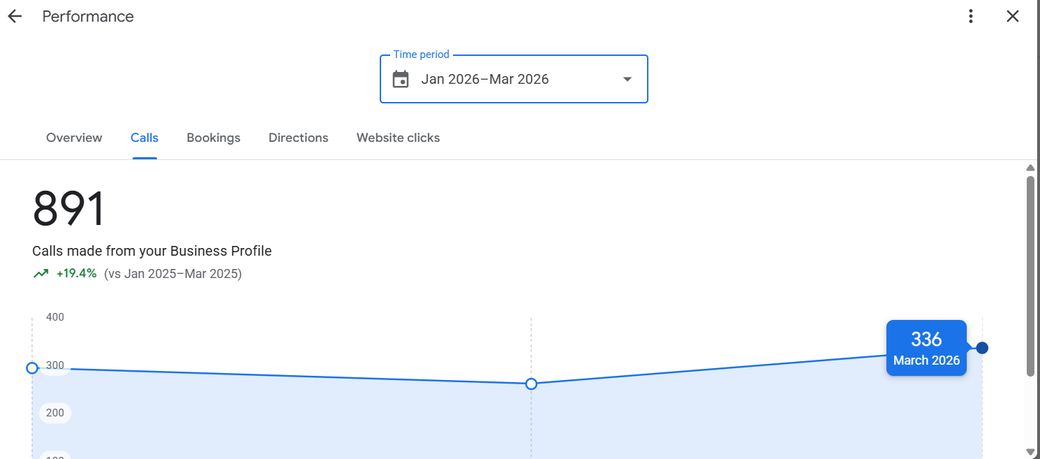
Cure Allergy Clinic · 891 calls from the Business Profile in January to March 2026, up 19.4% on the same quarter of 2025. This is the number the clinic cares about; the rankings behind it are in the healthcare SEO case study.
Which Google Business Profile metrics should a practice watch?
Watch the actions, not the views. The profile’s performance report counts four things a patient does after finding you on Google:
- Calls placed from the listing.
- Website clicks to your site.
- Direction requests, a strong sign of an imminent visit.
- Bookings, if you use a booking link or integration.
Profile views and the list of searches that showed your profile are useful context, but views without actions usually mean the profile isn’t convincing: too few reviews, missing services, or old photos. How to fix each is in the Google Business Profile guide for clinics.
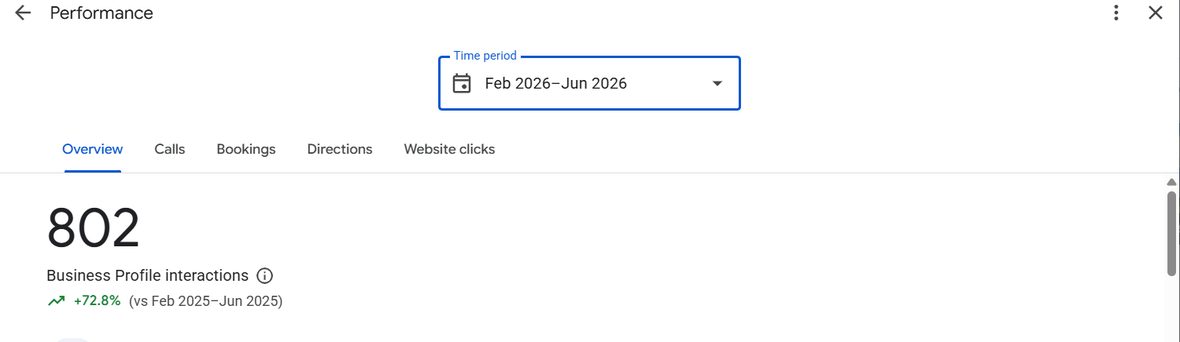
Vitality Direct Primary Care · 802 calls, bookings, direction requests and website clicks from February to June 2026, up 72.8% on the same months of 2025. See
the path DPC patients take from search to membership
.
Which Search Console and GA4 metrics predict growth?
These are the leading signals for your website. They move before calls do.
- Organic clicks to service and location pages (Search Console). Filter out blog posts and searches for your practice’s name: clicks to the pages that describe your care are the ones that turn into appointments.
- Impressions for non-branded searches (Search Console). Rising impressions for searches like a treatment plus your town mean Google is starting to show you to people who don’t know you yet.
- Click-through rate on your main pages (Search Console). If a page is seen often but rarely clicked, its title and description aren’t persuading anyone.
- Key events from organic visitors (GA4). Phone clicks, form submissions and booking clicks, reported for the organic channel only.
- Engagement rate on service pages (GA4). A low rate on a page that matters means visitors aren’t finding what they came for.
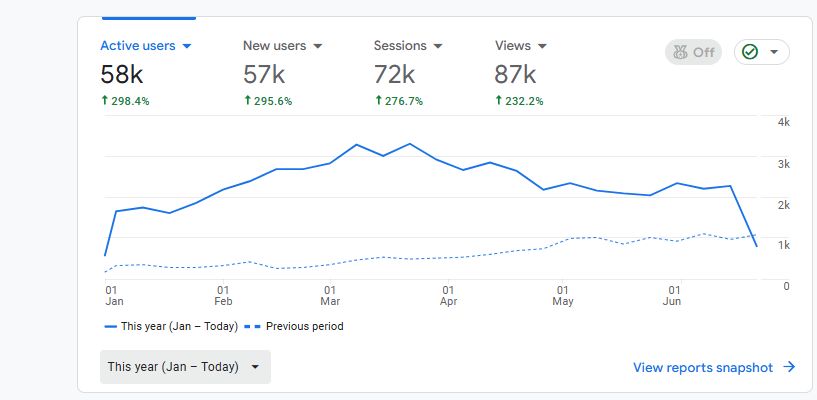
Cure Allergy Clinic · 58k active users in GA4 from January to June 2026, up 298% on the previous period. A good leading signal, but the report still opens with the calls above.
Which technical and trust metrics should you check each month?
These diagnostics explain changes in the tiers above. Check them monthly and act when one breaks.
- Indexed pages (Search Console Pages report). A sudden drop usually means a site change blocked Google.
- Core Web Vitals (Search Console). Slow mobile pages lose patients who are searching on their phones.
- Reviews: count, rating and pace. Compare with the three practices above you on the map. A steady flow beats a one-off push.
- Local mentions and links. Accurate listings and mentions from real local and medical organizations, not bulk link packages.
- Business Profile health. Verification status, categories, hours and any edits Google has suggested.
Which SEO numbers can mislead a medical practice?
Four numbers make reports look busy without telling you anything about patients.
- Average position. Falls when you start ranking for new searches, as Jersey Family Health’s quarter shows.
- Total organic traffic. A blog post that ranks nationally can double traffic and add no local patients.
- Number of keywords ranked. Counts every page-nine ranking as a win.
- Third-party authority scores. Tool scores Google does not use. Useful to compare sites, useless as a goal.
If a report leads with any of these, ask what happened to calls and bookings in the same month.
Should a practice track AI search visibility?
Yes, lightly, because patients have started asking AI assistants about care. Pew Research Center found in 2026 that 34% of US adults use AI chatbots for health information, and 15% use them to help decide whether to see a doctor.
Two simple measures are enough for now: visits from AI assistants in GA4 (look for referrals from sites such as chatgpt.com and perplexity.ai), and a monthly check of what the main assistants say when asked for a practice like yours in your town. Your organic search results still matter here, because AI answers draw on the same pages Google ranks. That is why AI search optimization for medical practices starts with SEO foundations rather than special files.
How do you measure SEO without risking patient privacy?
Measure behavior, never health information. Keep analytics and tracking tags off patient portals and any page that shows a patient’s condition, appointment details or other personal health information, and make sure form submissions don’t send their contents to analytics. In the US, read the HHS guidance on online tracking technologies with your compliance lead. Aggregate numbers such as calls, clicks and booking-button clicks tell you everything SEO needs to know.
What should a monthly SEO report for a practice look like?
One page, outcomes first, each number against last month and the same month last year, with one line explaining any big change. Agencies forwarding reports under their own brand can use the same order in my white label SEO reporting template.
| Metric | This month | Last month | Same month last year | What changed |
|---|---|---|---|---|
| New patients who said “Google” | ||||
| Business Profile calls | ||||
| Bookings and form requests (organic) | ||||
| Business Profile website clicks | ||||
| Business Profile direction requests | ||||
| Organic clicks to service pages | ||||
| Non-branded impressions | ||||
| New reviews and average rating |
Below the table, add three short lines: what was done this month, what changed because of it, and what comes next. It follows the same outcomes-first order my medical SEO service for clinics reports in each month.
How often should you review SEO metrics?
Monthly for outcomes, quarterly for the full picture. Compare each month with the same month last year as well as the one before, because many practices are seasonal. An allergy clinic’s spring is not comparable with its winter. Weekly checks mostly show noise, and they tempt people to change things before the last change has had time to work. In my experience, meaningful growth in patient searches takes three to six months, so judge a new strategy over a quarter, not a fortnight.
What should you do if the numbers aren’t moving?
Find the one thing holding them back before adding more work. If Business Profile actions are flat, look at the profile and reviews. If impressions are flat, look at indexing and missing pages. If clicks rise but calls don’t, look at the page patients land on and how easy it is to call or book. That order is the core of my constraint-first method, and the free growth diagnostic applies it to your practice within two business days.
Frequently asked questions
What is the most important SEO KPI for a medical practice?
New patients who found you through search. Most practices can't measure that perfectly, so track the closest numbers you can count every month: calls and bookings from your Google Business Profile, and call clicks, form submissions and booking clicks from organic visits to your website.
Is organic traffic a good KPI for a clinic?
Only as a supporting number. Organic traffic rises when a blog post ranks for something nobody local will ever book, so watch clicks to your service and location pages instead of total sessions, and judge them by the calls and bookings they produce.
How many Google reviews does a medical practice need?
There is no fixed number. Compare your count and rating with the three practices that appear above you on the map for your main service, and aim to close that gap with a steady flow of new reviews rather than a one-off push.
How often should a practice review its SEO numbers?
Look at outcomes monthly, compare each month with the same month last year to allow for seasons, and review the full picture once a quarter. Weekly checks mostly show noise, because search results move every day.