How a hospitality software platform grew its search reach ninefold in one quarter.
What results did SEO produce for this hospitality software platform?
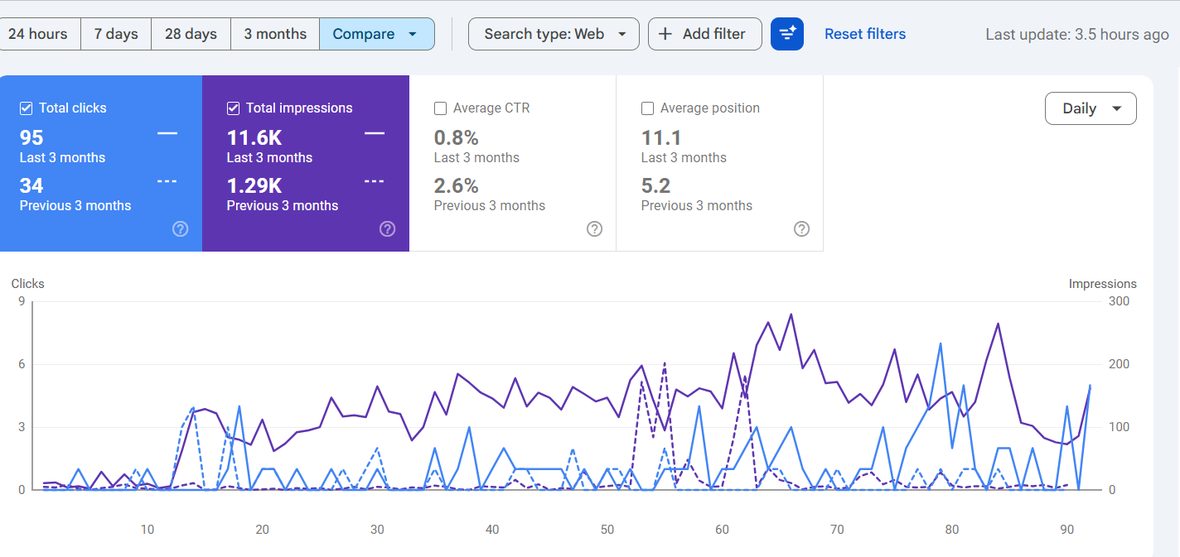
In one quarter against the quarter before, a hospitality software platform grew from 1,290 to 11,600 search impressions and from 34 to 95 organic clicks, up 179%. That followed SEO specialist Muhammad Haseeb Sheikh fixing its indexing and building its first set of pages mapped to what buyers search for. Average position moved from 5.2 to 11.1 and click-through rate from 2.6% to 0.8%, because the site went from appearing for a handful of searches to many more, most of them lower on the page. Every figure comes from the platform's own Search Console.
This software company sells to hospitality businesses, and almost nobody in that market ever saw it in Google: 1,290 impressions in three months. Its average position of 5.2 looked excellent, but it came from a handful of searches, most likely for its own name. One quarter after fixing indexing and building the first real pages, its reach was nine times larger and clicks nearly three times higher. Its average position got worse, and this case study explains why that was the right outcome.

A hospitality software platform had a near-zero search footprint: 1.29k impressions in three months. I, Muhammad Haseeb Sheikh, fixed the indexing problems so Google could show the site at all, then built its first set of pages mapped to the searches hospitality buyers make. Against the previous quarter, impressions grew from 1.29k to 11.6k and clicks from 34 to 95. Average position fell from 5.2 to 11.1 and click-through rate from 2.6% to 0.8%, because the site began ranking for far more searches, most of them further down the page.
What it meant for the platform
What did nine times more search reach mean for a SaaS product?
It meant hospitality buyers started to see the product at all. Before, the site appeared about 1,290 times in three months; after, about 11,600 times. Clicks followed, from 34 to 95, which is still a small number, but the first one that comes from people looking for software rather than for the company's name.
For a software company with a near-zero starting point, this first quarter is about becoming visible. Turning that visibility into demos is the next stage, once the new pages climb.
Impressions and clicks are read straight from the dashboard. They count appearances and visits, not trials or sales.
01 · The starting point
Why did the market never see the product?
Because Google had very little of the site to show. Indexing problems kept pages out of the results, and the pages that did exist didn't match the searches hospitality buyers make. So the platform appeared for a handful of searches, most likely its own name, and little else.
Access, then relevance. No amount of content would show up while the site couldn't be indexed, and once it could, there had to be pages built for what buyers actually search.
02 · The execution
What did I fix first on the hospitality platform’s site?
Foundations before volume, following the constraint-first method.
1. Fixed indexing
- Let Google in. The problems keeping pages out of the index were fixed, so the site could earn impressions at all.
2. Built the first intent-mapped pages
- A page for each buyer search that matters. The first set of pages was built around the searches hospitality businesses make when they look for software like this.
03 · The metrics, defined
What do the hospitality platform’s Search Console numbers measure?
They all come from Google Search Console.
04 · The results
How far did the platform’s search reach grow in one quarter?
Impressions climbed steadily through the quarter, and clicks rose with them. The before bars are short because the platform was barely appearing at all.
The hospitality platform’s quarter in Search Console
Does your market ever see your product?
The free diagnostic checks whether Google can index your site and which buyer searches you're missing, within two business days.
05 · Reading the numbers
Why did a great average position mean so little?
Because it was the average of very few searches. A position of 5.2 looks like page one, but it most likely came from people searching for the company by name, where any business ranks near the top. It said nothing about whether buyers looking for hospitality software could find the product.
Once the new pages were indexed, the site began appearing for many more searches, most of them on page two or lower at first. Averages count every search equally, so position moved from 5.2 to 11.1 and click-through rate from 2.6% to 0.8%, while impressions grew ninefold and clicks nearly tripled.
Ranking first for your own name and nowhere else gives a perfect average and almost no customers. Adding a hundred new searches at position fifteen makes the average worse and the business more visible. The same thing happened at a family practice whose averages fell as its clicks rose sixfold.
06 · The honest read
What grew the platform’s reach, and where are the limits?
What did the heavy lifting
- Fixing indexing first. Until Google could see the site, nothing else could show up.
- Pages for real buyer searches. The first intent-mapped pages gave Google something to show for the searches that matter.
The honest limits
- Multiples flatter a shallow base. Nine times more impressions sounds large because the start was close to zero. The signal is the direction and the slope, not the count.
- Small absolute numbers. 95 clicks a quarter is an early result in a niche B2B market, not a finished one.
- Visits, not revenue. The dashboard counts search appearances and visits. Demos and sales depend on the product pages and the sales process.
07 · For other teams
What can SaaS teams learn about growing from a tiny search footprint?
- Check indexing before anything else. A site Google can't index won't rank for anything, however good the copy.
- Don't trust a great average from a tiny footprint. A high average position on a handful of branded searches hides how invisible you are to buyers.
- Expect averages to fall when reach grows. Judge early work on impressions and clicks; position and CTR settle later.
For the stage before this one, a brand-new site's first quarter, see the SaaS launch SEO case study. For a software case further along, where every metric rose together, read the B2B SaaS case study for a restaurant ordering platform. Agencies with software clients can have this same work delivered under their brand through white-label SEO for agencies.
08 · Questions
Frequently asked questions
Why did average position get worse when SEO was working?+
What should a SaaS company with almost no search traffic fix first?+
Is a ninefold rise in impressions a big result?+
Why isn't the hospitality software platform named?+
Find out why buyers aren't finding your product.
Book a free 30-minute call, or send your site for a written diagnostic within two business days. Either way you get the one constraint, the first fix, and why.
Hiring for an SEO role? My background, work history and certifications are on the about page.